

For many patients, the most stubborn reminder of acne or sun exposure is not a deep scar. It is discoloration: dark marks, patchy tone, melasma, and skin that never quite looks clear.
If you are searching for pigmentation treatment near Shah Alam, laser options for hyperpigmentation in Malaysia, or help with melasma, Q-Switch NdYag laser is one of the key modalities to understand.
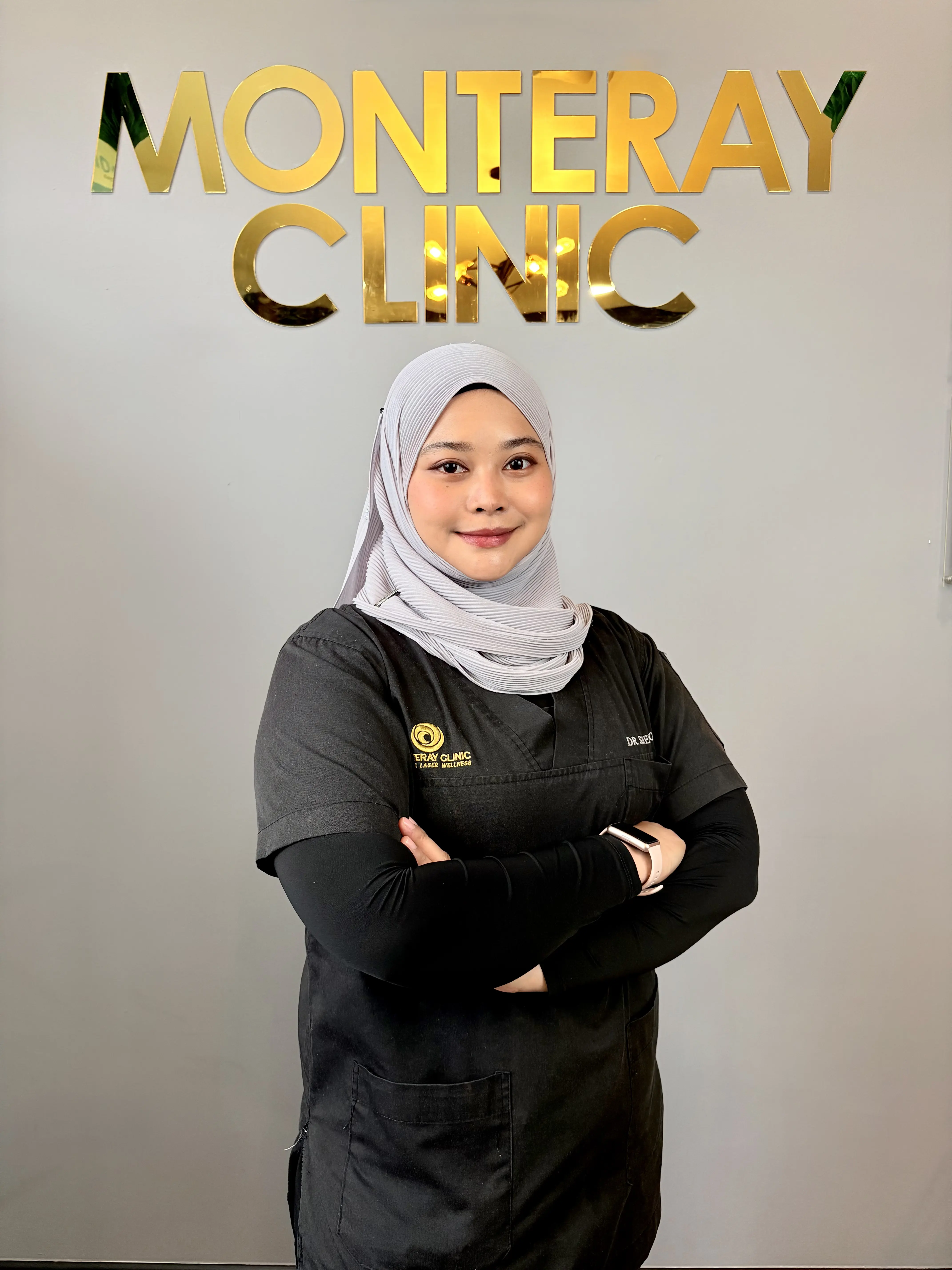
At Monteray Clinic in Bandar Rimbayu, laser decisions are doctor-led by Dr. Sheila Om, an LCP-certified aesthetic doctor experienced in problematic and ageing skin. See our full laser and skin resurfacing treatments.
What Q-Switch laser is used for
At Monteray Clinic, Q-Switch NdYag laser is used to target pigmentation concerns such as:
- Melasma
- Hyperpigmentation
- Sunspots
- Freckles
- Uneven skin tone
- Residual post-acne marks that leave the complexion looking dull or blotchy
The laser delivers precise energy into the skin to help break down excess pigment particles, which the body then clears over time. The goal is improved clarity and brightness — a more even, refined complexion — not an artificial “bleached” look.
Melasma vs post-acne marks vs true scars
This distinction changes the plan:
Melasma
A pigment condition often linked to sun exposure, hormones, heat, and genetic tendency. It can be stubborn and easily aggravated. Treatment must be cautious. Aggressive settings or poor sun behaviour can worsen it.
Post-acne marks (PIH)
Colour left after inflammation. These marks can fade with time and targeted care, especially when sun protection is excellent. Q-Switch pathways may help accelerate clarity when clinically suitable.
True textural scars
Ice-pick, boxcar, and rolling scars are structural. Q-Switch is not the primary tool for deep texture. Those cases may need Fractional CO2, TCA CROSS, or combination scar plans.
A patient mainly bothered by dark marks may benefit more from Q-Switch care, while someone with ice-pick or boxcar scars may need Fractional CO2 and TCA CROSS. Many people have pigment and texture once. Sequencing treatments correctly is part of good medical care.
Start with scar mapping here if needed: acne scar types and options.
Why melasma needs a careful plan
Melasma is one of the highest-intent pigmentation searches in the Shah Alam English dataset for a reason: it is common, visible, and emotionally draining. It is also easy to treat badly.
A doctor-led melasma approach usually includes:
- Confirming the pattern (and ruling out lookalikes)
- Strict sun and heat discipline
- Barrier-supportive skincare
- Cautious device settings when laser is used
- Realistic timelines — control and improvement, not permanent “erase forever” promises
- Maintenance, because melasma can recur with triggers
If a clinic promises permanent melasma clearance after one laser session, treat that claim with scepticism.
What to expect from Q-Switch laser treatment
Q-Switch sessions are generally efficient and lower-disruption than deep resurfacing:
- Duration: about 30 minutes
- Discomfort: typically minimal for many patients
- Downtime: none for many milder sessions
- Results: often noticeable within about 2 sessions, with progressive improvement across a course of care
Because there is little or no downtime with milder sessions, this treatment can be easier to fit into work and daily life than Fractional CO2. That does not make it “simple.” Diagnosis and parameters still matter.
Important cautions before pigmentation laser
Laser is not a casual add-on. Skin preparation matters.
We strongly advise against laser treatments on recently tanned or heavily sun-exposed skin, as this increases the risk of post-inflammatory hyperpigmentation. Best practice is to avoid direct sun exposure for at least four weeks before a scheduled session where advised, and maintain strong sun protection afterward.
Your doctor will also assess whether your skin is currently suitable — especially if active acne, barrier damage, sensitivity, or complex melasma patterns are present.
Practical pre-care habits
- Daily broad-spectrum sunscreen, reapplied when outdoors
- Hats and shade in Malaysian heat
- Pause self-prescribed harsh peels or unregulated brightening products
- Tell your doctor about hormones, pregnancy plans, and prior laser history
Building clearer skin over time
Pigmentation care is rarely a single-session story. Results build as pigment clears and tone becomes more uniform. Supporting the skin with appropriate skincare, sun protection, and — when needed — complementary treatments such as medical peels or skinboosters can help maintain clarity.
A typical journey may look like:
- Assessment and trigger review
- Foundational skincare and sun protocol
- Series of Q-Switch sessions if suitable
- Review of residual pigment vs texture needs
- Maintenance plan for high-risk periods (sun, travel, hormonal shifts)
Who benefits most
Q-Switch pathways are often considered when:
- Dark marks or uneven tone are the main concern
- Melasma needs a cautious, structured plan
- You want lower downtime than deep resurfacing
- Pigment remains after acne has settled
They are less appropriate as a solo plan when deep structural scars are the real issue.
Related reading
- Acne Scar Treatment: Types and Options
- Fractional CO2 and TCA CROSS for Acne Scars
- Skinboosters Explained
- Finding the Right Aesthetic Clinic in Shah Alam
FAQ: Q-Switch laser and pigmentation
Is Q-Switch laser good for melasma?
It can be part of a carefully planned melasma approach. Melasma needs cautious settings, sun discipline, and maintenance. It is not a one-session cure.
How many sessions will I need?
Many patients need a short series. Your doctor will estimate based on pigment type, depth, and response.
Is there downtime?
Often minimal for milder sessions. Some people experience temporary darkening of spots before clearance, which should be explained in consultation.
Can Q-Switch remove ice-pick scars?
No. Structural scars need scar-specific techniques. Q-Switch targets pigment more than deep texture.
Is treatment available near Shah Alam?
Yes. Monteray Clinic in Bandar Rimbayu is accessible for patients seeking pigmentation treatment in the Shah Alam area.
Can I do laser if I have medium or deeper skin tone?
Often yes, with careful assessment. Pigment risk is why doctor-led parameter selection matters in Malaysia.
Daily habits that decide pigment outcomes
Device choice matters. Daily behaviour decides whether results hold. For melasma and hyperpigmentation in Malaysia, non-negotiables usually include:
- Broad-spectrum sunscreen every morning
- Reapplication with outdoor time
- Heat awareness (cooking steam, intense sun sport, long unshaded walks)
- Gentle cleansing if barrier is compromised
- Avoiding unregulated “whitening” stacks from social sellers
Laser cannot outrun daily UV and heat triggers. Patients who treat sunscreen as optional often need more sessions and still relapse faster.
Setting expectations for stubborn melasma
Melasma can improve and still require maintenance. A honest endpoint conversation may sound like:
- Clearer, more even tone
- Less contrast between patches and surrounding skin
- Better makeup uniformity
- A maintenance plan for high-risk seasons or hormonal shifts
“Permanent forever after one laser” is not a medical standard for melasma. Clinics that promise it are selling certainty the biology does not offer.
When pigment and texture need two pathways
If you have both dark marks and ice-pick/boxcar scars, ask which problem is the priority for the next 90 days. Trying to solve everything at maximum intensity at once can increase downtime and pigment risk. Doctor-led sequencing protects both safety and results.
Differential thinking: not every dark patch is the same
Before committing to a pigment laser series, clinicians sort lookalike problems:
- Melasma patterns
- Post-inflammatory hyperpigmentation after acne
- Sunspots / freckles
- Hori’s naevus and other dermal pigment patterns (selected cases)
- Texture shadows that look like pigment in photos
- Residual erythema that reads as discoloration in certain light
Wrong category, wrong tool. This is why photo filters and self-diagnosis fail.
Session cadence and patience
Many Q-Switch plans are spaced to allow pigment clearance and skin recovery. Chasing weekly aggressive sessions is not automatically faster — and can be counterproductive in melasma-prone skin. Ask:
- Why this interval?
- What response would make us slow down?
- What response would make us change modality?
Makeup and social downtime
One reason Q-Switch is popular versus deep resurfacing is lower social downtime for many milder sessions. Still:
- Temporary darkening of spots can happen
- Redness can be visible for hours
- Events within 48 hours should be discussed in advance
If you have a wedding, major shoot, or travel in strong sun, say so early so timing can be planned.
Medical note
Educational content only. Laser suitability, risks (including pigment darkening or incomplete response), and aftercare must be confirmed in clinic after examination.
Doctor-led laser care at Monteray
Laser decisions should be based on diagnosis, not trends. At Monteray Clinic, aesthetic medicine is led by Dr. Sheila Om with a focus on safety, proportion, and long-term skin quality.
Whether your concern is leftover acne marks, sun damage, melasma, or uneven tone, the right plan starts with understanding the pigment pattern in front of us.
Book a skin assessment or call 0122493449.