

Active acne is difficult enough. The marks and texture left behind can feel even more frustrating — especially when creams only take you so far.
If you are searching for acne scar treatment in Malaysia, or an acne scar clinic near Shah Alam, the most important first step is understanding what kind of scar you have. Treatment that helps a rolling scar may do little for a deep ice-pick scar. Pigment marks need a different plan from true textural scars.
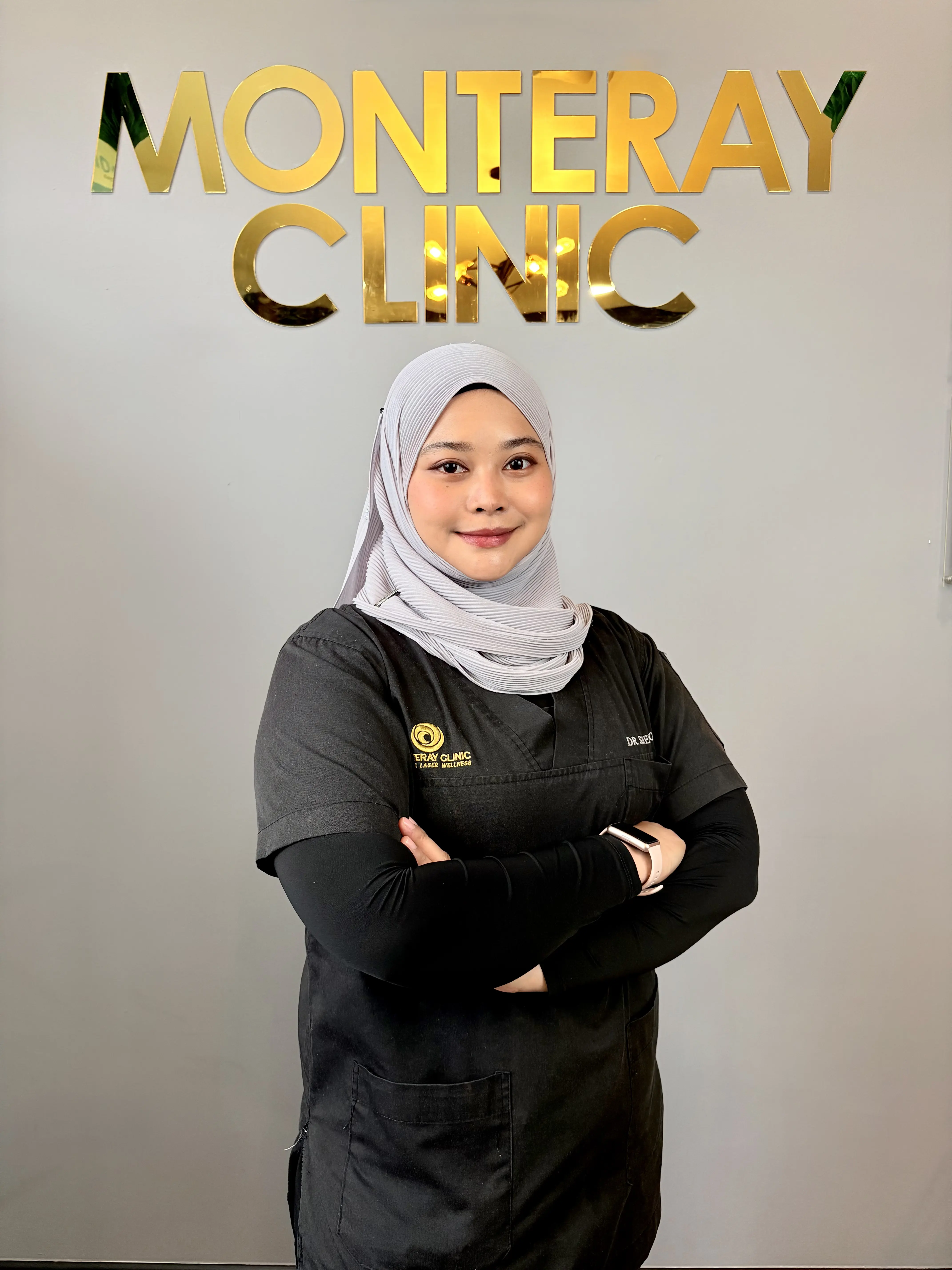
At Monteray Clinic in Bandar Rimbayu, acne scar care is doctor-led by Dr. Sheila Om, an LCP-certified aesthetic doctor with extensive experience in problematic and ageing skin.
Why acne scars form
Acne scars develop when inflammation damages the skin’s deeper structure. As the skin heals, collagen may be lost or laid down unevenly. That can leave:
- Depressions
- Raised or irregular texture
- Colour changes that make marks more obvious
Not every mark after acne is a true scar. Some are temporary pigment changes (post-inflammatory hyperpigmentation). Others are textural scars that need medical resurfacing or targeted scar techniques for meaningful improvement.
Active acne should usually be controlled before aggressive scar revision. Treating scars while inflammation is still high can slow progress and increase complication risk.
Types of acne scars
Ice-pick scars
These are deep, narrow scars that look like small punctures in the skin. Because the base sits deep, surface peels or mild lasers alone often cannot reach them effectively.
Often considered: TCA CROSS, sometimes combined with broader resurfacing later.
Boxcar scars
Boxcar scars have broader bases and more defined edges. Depth varies. Shallower boxcar scars may respond well to fractional resurfacing; deeper ones may need a combination plan.
Often considered: Fractional CO2 laser, TCA CROSS for selected lesions, staged combination care.
Rolling scars
Rolling scars create a wave-like unevenness. They are often related to tethering under the skin surface. Improvement usually comes from collagen remodelling and, in some cases, techniques that release or remodel deeper structure.
Often considered: Fractional CO2 laser and broader texture-focused plans.
Pigmented marks after acne
Dark marks after spots are not always “scars” in the structural sense. They are colour changes that can still be very visible — especially on medium to deeper skin tones common in Malaysia.
Often considered: Q-Switch NdYag pathways, sun protection, barrier support, and careful timing around other procedures.
For a deeper pigment-focused guide, read Q-Switch laser for pigmentation and post-acne marks.
How doctors match scar type to treatment
A useful consultation answers three questions:
- What is the scar architecture? (ice-pick, boxcar, rolling, mixed)
- What is the colour component? (brown marks, redness, mixed)
- What can your skin tolerate now? (skin type, healing history, lifestyle, downtime window)
Many faces are mixed. That is normal. Mixed patterns usually need staged care, not one device sold as a cure-all.
Acne scar treatment options at Monteray Clinic
Our laser and skin resurfacing pathway is designed for acne scars, enlarged pores, uneven texture, and pigmentation. Key options include:
Fractional CO2 laser
Creates controlled micro-injuries to stimulate collagen renewal. Useful for broader texture issues, pores, and many scar patterns. Expect real downtime and progressive remodelling over weeks.
TCA CROSS
A precision technique where trichloroacetic acid is carefully applied into selected deep scars to stimulate regeneration from within. Especially relevant for ice-pick and some boxcar scars.
Q-Switch NdYag laser
Better for pigment than deep structural scars. Helps melasma, sunspots, freckles, uneven tone, and residual post-acne marks.
Combination plans
Often the strongest approach when texture and pigment both exist. Sequencing matters: wrong order can increase downtime or pigment risk.
Read the detailed comparison: Fractional CO2 and TCA CROSS for acne scars.
What improvement realistically looks like
Acne scar treatment is a journey, not a one-session reset. Realistic expectations usually include:
- Visible improvement rather than total erasure
- Progressive change as collagen remodels
- Better makeup sit and light reflection on the skin
- Clearer distinction between scar texture and leftover pigment
Many patients notice change after an appropriately chosen first session, with continued gains over subsequent treatments. Skin that is protected from sun and supported with good aftercare heals more predictably.
We do not promise “scar-free in one session.” Clinics that do are selling hope, not medicine.
Who is a good candidate?
You may be a candidate for medical scar revision if:
- Active acne is controlled or being managed
- Scars affect confidence, texture, or daily appearance
- You can follow aftercare and sun protection
- You accept a series rather than a single visit
You may need to wait or modify plans if:
- Acne is highly active
- You have a recent tan or heavy sun exposure
- You cannot accommodate downtime for resurfacing
- There is infection, open wounds, or uncontrolled skin disease in the area
- Medical history raises healing concerns that need review first
What happens in a scar consultation
At Monteray Clinic near Shah Alam, assessment typically covers:
- Scar mapping by type and depth
- Skin type and pigment risk
- Previous treatments and response
- Downtime tolerance (work, events, travel)
- Budget and session planning in practical terms
- A staged plan with priorities (what first, what later)
Under Dr. Sheila Om’s care, every plan begins with clinical assessment and realistic goal-setting. Explore the broader aesthetic medicine context if you also want injectables or skin-quality support later.
Aftercare principles that protect results
Whatever modality you choose, results depend heavily on what you do afterwards:
- Follow clinic skincare instructions exactly
- Do not pick scabs or peeling skin
- Use diligent broad-spectrum sun protection
- Avoid aggressive actives until cleared
- Attend review visits so intensity can be adjusted
Collagen remodelling continues after visible redness settles. Patience is part of the treatment.
Cost and session planning in Malaysia
Patients often ask about acne scar treatment cost. Pricing varies with:
- Scar extent and depth
- Treatment modality (CO2, TCA CROSS, Q-Switch, combination)
- Number of sessions
- Whether full-face or localised areas are treated
A consultation is the only accurate way to plan both budget and timeline. Be cautious of fixed package promises made without examination.
Related reading
- Fractional CO2 and TCA CROSS for Acne Scars
- Q-Switch Laser for Pigmentation and Post-Acne Marks
- Finding the Right Aesthetic Clinic in Shah Alam
- Explore Aesthetic Medicine
FAQ: Acne scar treatment
Can creams remove acne scars?
Topicals can support barrier health and sometimes improve mild pigment. Established textural scars usually need medical procedures for meaningful change.
Which is better for ice-pick scars: laser or TCA CROSS?
Deep ice-pick scars often need TCA CROSS. Broader texture issues often need Fractional CO2. Many plans combine both over time.
How many sessions will I need?
Most patients need a series. Your doctor estimates after assessing scar type, skin response, and goals.
Is acne scar treatment available near Shah Alam?
Yes. Monteray Clinic in Bandar Rimbayu serves patients from Shah Alam, Kota Kemuning, and the wider Klang Valley.
Will my scars come back?
Treated scars do not usually “return,” but new acne can create new marks. Controlling breakouts and protecting skin remains essential.
Is darker skin treatable?
Yes, with careful parameter selection, pigment-risk assessment, and strong sun discipline. This is one reason doctor-led care matters in Malaysia.
Planning a scar journey over months, not days
Acne scar revision is better understood as a programme than a procedure. Collagen remodelling is biological, not instant. A practical timeline many patients can use as a mental model:
- Month 0: diagnosis, photography, active acne control if needed
- Months 1–3: foundational scar work (for example TCA CROSS for ice-picks and/or first resurfacing)
- Months 3–6: progressive texture refinement and review of residual pigment
- Months 6–12: maintenance, optional regenerative support, and realistic endpoint discussion
Your timeline will differ. Depth, skin type, downtime tolerance, and budget all change pacing. The point is to stop expecting a single-session transformation and start measuring progress across reviews.
Photography and progress tracking
Ask for consistent clinical photos under similar lighting. Progress that feels subtle day-to-day often looks clearer in side-by-side images at 8–12 weeks. This protects you from both false disappointment and false marketing.
Combining scar care with skin quality later
Once structural scars improve, some patients add skin-quality treatments to refine glow and makeup sit. That sequence matters: rebuild architecture first when texture is the main issue, then polish. Skinboosters and medical skincare support results; they do not replace scar revision.
Emotional context is clinical context
Scars affect confidence, dating, camera avoidance, and workplace self-presentation. A good consultation leaves room for that conversation without turning it into upselling. The medical plan should still be grounded in scar type and safety — but your goals help prioritise which areas to treat first.
Medical note
Educational content on this page does not replace personal medical advice. Suitability for laser, TCA CROSS, or combination scar revision is confirmed only after clinical assessment.
If scars are affecting your confidence
You do not have to accept texture changes as permanent. With the right combination of resurfacing, pigment care, and regenerative support, skin can become smoother, clearer, and more even over time.
To discuss your scar type and options, book a consultation or call 0122493449.